Top 11 Ways to Re-use-Repurpose-Rethink-Belts
Written by Cathy on April 30, 2009 – 1:03 pm -Welcome back!
I’m getting ready for my annual clothing exchange to benefit Battered Women. Going through the closets and all the belts- I hate to donate because last time I did this and gave away about 20 belts, I was really sorry-. Sometimes you can get just carried away with the ‘getting rid of stuff’ syndrome. So what can you do with old belts? Especially with old belts, you don’t particulary want to give away, but you want them to serve a dual purpose.
Top 11 Ways to Reuse-Recycle-Repurpose- Rethink- Repair Belts
1.) Replace worn out seat cushion with weaved together straps
2.) Hang on wall for an earring holder
3.) Twist around boxes for a handle
4.) Use the saved webbing to replace the worn out straps on canvas tote bags or some purses. Get some canvas and make your own bag with the webbing used for the carry handles
5.) Use to store bulky items- like blankets, sleeping bags, tents,
6.) Vinyl Belt Floor Mat – Branch Home
to see a Belt Floor- Green Upgrader
7.) Make a Necklace
8.) Reuse for stretching exercises or got to Wellness Belts 705-739-6885 who will recycle your belt
9.) Make a headband- very Retro
10.) Keep items handy with an organizer belt. Slide some S-hooks into the belt holes and glue a strong magnet to a portion of the back of the belt, then attach it to a wall or the bottom edge of a whiteboard or a bulletin board with screws for an industrial look. Use small, powerful magnets to secure messages and notes to the front and hang keys, scarves or other small items from the hooks.
11.) Hang several belts on a wall as art. The options are endless, so have fun staggering, aligning and crisscrossing until you’re happy with the visual effect. Just be sure to attach the belts to the wall or a frame using clear rubber bands or clips that won’t damage the belt
Tags: Reuse
Posted in Re-use- Make Money | No Comments »
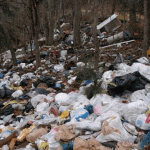
Litter-Trash-Garbage in Minnesota
Written by Cathy on April 30, 2009 – 12:21 pm -
- Minnesota spends $5 Million a year collecting litter- not counting what cities and counties spend.
- Tipping Fees imposed by landfills cost Minnesota Department of Transportation $250,000 per year
- Adopt a Highway
- Adopt a Highway Volunteers save Minnesota Department of Transportation $6.9 Million per year
- Adopt a Highway Volunteers pick up litter on more than 12,000 miles of Minnesota Roads
- Adopt a Highway Volunteers pick up approximated 26,000 tons of litter every year
- Litter Record- 1 Day Sweep in I35W (Minneeapolis) Volunteers picked up 192 tons of trash in 1 day.
- Misdemeanor- entered on driving record.
- 2nd office a minimum fine of $400 up to $700
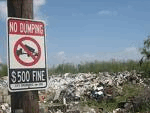
- Minnesota Department of Transportation can bill an individual for retrieving and disposing of illegal dumped items.
- Prisoners- Sentencing to Service (STS): Selected, non-violent offenders sentenced by the court to work on community improvement projects in combination with jail time, or as a probation sanction. Started in 1986, about 30,000 offenders participate in STS annually across the state, working over one million hours.
- Collecting trash on highway shoulder costs about $2 Million per year
- Open dumps create a public nuisance, divert land from more productive uses and depress the value of surrounding land. They can also pose the following health, safety and environmental threats:
- Fire and explosion
- Injury to children playing in or around the dump site
- Disease carried by mosquitoes, flies and rodents
- Contamination of streams, rivers and lakes
- Contamination of soil and groundwater
- Contamination of drinking water wells
- Damage to plant and wildlife habitats
- Decrease in the quality of life to nearby communities and residents”
According to Minnesota Pollution Control Agency projections, state residents will get rid of 10 million pounds of televisions and another 10 million pounds of computers, monitors, laptops and printers next year. Disposing of the equipment can cost from $5 to more than $25.
State highway department workers called Morrison County officials and asked why they were finding a flurry of TVs and monitors in ditches. The county’s environmental specialist said other residents resorted to wrapping electronics in black plastic bags and leaving them at landfills anyway
St. Paul- City officials say they have received more than 36,000 complaints over the past two years and have picked up 300 tons of trash in public areas, but they are still searching for solutions.
Tags: MN
Posted in Minnesota | 2 Comments »
27 Tips For Conserving Water in Your Yard
Written by Cathy on April 30, 2009 – 7:59 am -
Water Runoff-Conserving water in your yard is becoming crucial today- especially going into summer with water rationing a looming necessity. The Goals:
- Water as infrequently as possible
- Develop Yard and Garden into a sustainable, green and eco friendly environment.
I Just Gotta Tell Ya
- Overwatering can damage a lawn- roots don’t need to go deeper.
- A sprinkler hose can use as much water in an hour than a family uses in a day.
19 Tips for Greening and Conserving Water in Your Yard
- If you can- get a rainbarrel-
- Leave Grass cuttings on the lawn to feed the soil- less work for you and better for the soil.
- Mow less- Longer grass (2-1/2 to 3-1/2 inches, depending on the grass variety) stays greener than a close-mown lawn, is less likely to scorch, and needs less watering.
- Use Native Grasses- they grow better in local climates.
- Don’t worry about the brown patches
- Put in an irrigation system that adjusts water according to conditions or Install a Drip System such as this starter kit Raindrip Automatic Drip Watering Kit #R559DP
Drip Systems use 70% less water than an sprinkler system.
- Check all sprinklers weekly to make sure they are watering the lawn- not the street.
- Install Low Flow Sprinklers- Available from Raindrip Low-Flow Sprinkler Kit #R547DP
- Fertiize with Compost- no need to buy Fertilizer- saving you money and the environment.
- Keep from fertilizing your lawn during the summer. Fast growing grass requires more water.
- Mulch around all shrubs, trees, and flowers. This will keep the soil cooler and minimize evaporation
- Reuse all water in house for the yard
- Water less but deeper. Watering only when your grass really needs it encourages the roots to grow deeper
- Use a screwdriver as a soil probe to test soil moisture. If it goes in easily, don’t water. Proper lawn watering can save thousands of gallons of water annually.
- Consider increasing the shade in your yard by planting new trees and mulching those too. You can consider if it’s time to put up a fence, add a garden structure, or throw in a canopy.
- Water early in the morning (before 8am) and after 8 pm)
- Avoid runoff: Allowing water to run off your lawn and in to the driveway or street, it isn’t doing your grass any good. If water starts to run off your lawn before you’ve been able to give it a good, deep watering, turn off the water for 15 or 20 minutes to let the soil absorb the water, and then continue watering as needed; rotating a sprinkler from one area to another will also do the trick.
- Water different areas with different amounts: You don’t need to water cactus and other native plants as often. If part of your lawn is shrouded by shade trees, it’ll require less water than a south-facing slope that gets lots of solar exposure, so pay attention to how the sun and other features like trees affect your lawn, and adjust your watering patterns accordingly.
- Group plants with the same watering needs together to get the most out of your watering time.
- Aerating the soil allows oxygen to penetrate and restores proper drainage. Most lawns should be aerated at least twice a year, once early in the spring and once in the fall. Punch holes in your lawn about six inches apart so water will reach the roots rather than run off the surface.
- Killing fast growing weeds early will help you to conserve water They can require more water or even rob your plants and grass of water requiring you to water more often.
- Use a broom instead of a hose to clean driveway and sidewalks- Save about 80 Gallons of Water every time.
- Use the sprinkler for larger areas of grass. Water small patches by hand to avoid waste.
- Reduce the amount of grass in your yard by planting shrubs, and ground cover with rock and granite mulching.
- Don’t water your lawn on windy days. After all, sidewalks and driveways don’t need water.
- When watering grass on steep slopes, use a soaker hose to prevent wasteful runoff
- Wash your car on the grass. This will water your lawn at the same time. – Although it is better to take your car to a car wash who reuse water.
Algreen 81002 Agua Rain Water Collection and Storage System, 50 Gallons
Recommended Books
The Urban/Suburban Composter: The Complete Guide to Backyard, Balcony, and Apartment Composting
Tags: Garden, Water
Posted in Garden/Landscaping | 2 Comments »
Recycle-Reuse- Make Money- Cars
Written by Cathy on April 29, 2009 – 8:33 am -
One set neighbors have a total of 4 cars (2 people) another neighbor has 4 cars (1 person)- all taking up valuable parking spaces, polluting the air because they either won’t or don’t know how to get rid of them.
I just Gotta Tell Ya:
- The Steel Recycling Institute estimates that vehicle recycling represents 14 million tons of recovered steel. It also provides reusable parts for new cars, such as wheels and windows, and offers a solution for unwanted, junk cars. Keep America Beautiful found 15,000 trashed cars in American parks in 2008 alone.
- More than a million cars are being illegally dumped very year
- About 65 percent of a junked car is made from steel (the rest is made from other metals plus glass, rubber and upholstery). The price for scrap steel and iron, though volatile, often hovers around $250 per ton.
- Recycling metal uses about 74 percent less energy than making new steel, according to theEnvironmental Protection Agency. Recycled steel is cheaper as well, since new ore doesn’t have to be mined to produce it.
- All steel produced today has at least 25 percent recycled steel in it, and some products are made entirely from recycled steel. So in addition to the economic and environmental benefits, recycling cars is a vital link in the world’s industrial infrastructure.
- Rubber tires decompose naturally over a fairly reasonable-sounding period of 50 to 80 years.
- Engine blocks will take at least 500 years to break down
- Polyurethane seat cushions under your fine leather interior: they take at least 1,000 years to decompose.
- It will reportedly take a million years or more before your vehicle’s windshield is ground down to powde
The most eco friendly thing you can do with cars- is not have one- will save you tons of money and the environment. That said- the next eco friendly thing you can do- is drive less (saving more money and the environment) and keeping your car longer, buying hybrids, keeping your car tuned and in good shape. Barring that- do not illegally dump your car- sell it, donate it or recycle.
Where to Donate:
- Habitat’s Cars for Homes™ program offers free pick-up and recycling of vehicles in any condition. The vehicle must have four inflated tires to facilitate towing, and a vehicle title is required to show transferal of ownership. In addition to cars, trucks, boats, motorcycles, RVs and even construction equipment are accepted.
- Vehicle Donation Program- Teddy Bear Corps
- Kars4Kids-
Resources
- Steel Recycling Institute-
- Earth 911- Tips on Recycling Miscellaneous Car Parts
- Autoblog- Green- Great information on Auto Scrapping and Green Cars
Tags: Recycle
Posted in Re-use- Make Money | No Comments »
Bloggers Unite for Hunger and Hope Day
Written by Cathy on April 29, 2009 – 7:48 am -I just Gotta Tell Ya
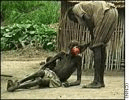
- 963 Million people across the world are hungry
- 16,000 children die from hunger- related causes every day.
- In the United States- 10.9% or 35.5 Million people live in household that experience hunger.
- Each year, more than five million children die from under nutrition and a further 1.8 million from food- and water-borne diarrhoea diseases.”
- American throw away $48 Billion Dollars worth of food every year.
-
- $20 billion worth of food that supermarkets throw away every year.
- Recent studies estimate that Americans waste approximately 25 percent of their groceries instead of consuming them.
- Factor in an average cost of $7,000 a year on groceries (this is the number for a household of three, so it will vary according to your location and family size), you get a waste of $1750 a year.
- Rotting food also pumps heaps of greenhouse gases into the atmosphere. Plus the costs for collecting, transporting and land filling the excess food come from the taxpayers.
If the average family is throwing away $1750 worth of food a year- why not donate it instead? Cut back on the amount of food waste and with your savings donate to your local charity of get involved with an organization like Heifer International., who focus on ending world hunger by community involvement, education and sustainable agriculture.
Resource
- Millions of Mouths- Photo Album
Tags: Organizations
Posted in Organizations | No Comments »
Littering and Property Values
Written by Cathy on April 29, 2009 – 7:24 am -Littering and Property Values
Littered neighborhoods can result in property values being lowered by as much as 15 percent. Real Estate of any kind is difficult to sell when surrounded by litter and trash.
Allowing litter in your community, you might as well put up a billboard that says you don’t care about your community’s future.
Litter leads to crime- by having litter in a neighborhood signals to criminals that the residents of the area do not care what happens in their neighborhood.
Litter leads to disease and unwanted rodents- who want to buy in a rodent infested neighborhood?
Litter is not a new problem- watch this video from 1966.
In Being A Good Neighbor By Cleaning Up Your House And Yard. From the film, “It Must Be The Neighbors” (1966). Bill Duncan gets a Health Department citation for having a rusted-out garbage can. He talks to his buddy at the Health Department and learns that his neighborhood is filled with rats, disease carrying mosquitoes and neighbors who are eager to blame these problems on each other. These can be common problems in suburbs where the health departments do not have the resources to intervene. Production Company: US Public Health Service. Creative Commons license: Public Domain.
Tags: Pollution
Posted in Litter-Trash-Garbage | No Comments »
Greenwashing Rampant in Consumer Marketing
Written by Cathy on April 28, 2009 – 5:05 am -Just read this article from e-magazine-
A new report released last week by consulting firm TerraChoice Environmental Marketing found that just 2% of the self-proclaimed “green” products on shelves in big box stores across North America live up to their sustainable claims. The firm accuses the manufacturers of the other 98% of so-called “green” consumer items tested to be guilty of “greenwashing,” that is, misleading consumers about the environmental benefits of their products and/or practices.
The recently released report is an update of a similar study released in 2007. The firm found that while the number of legitimately green products in stores increased dramatically over the last two years, marketing claims on other products also became “more creative.”
“The good news is that the growing availability of green products shows that consumers are demanding more environmentally responsible choices and that marketers and manufacturers are listening,” reported Scott McDougall, TerraChoice ‘s CEO.
“The bad news is that TerraChoice’s survey of 2,219 consumer products in Canada and the U.S. shows that 98% committed … greenwashing and that some marketers are exploiting consumers’ demand for third-party certification by creating fake labels or false suggestions of third-party endorsement,” he added.
In putting together the report, TerraChoice researchers noted product details, claims, supporting information and manufacturers’ offers of more information or support, and then tested the claims against best practice guidelines provided by national trade bureaus in Canada, Australia and the U.S., as well as against the standard for environmental labeling set by the International Organization for Standardization.
Tags: Green business
Posted in Business | No Comments »
iPhone App offers Discount- Coupon Sherpa
Written by Cathy on April 28, 2009 – 5:03 am -Now you don’t have a reason to not get rid of your junk mail. Coupon shoppers now have a way to get their discounts without using a piece of paper.
Introducing Coupon Sherpa- allows shopper s to access in store coupons on their iPhone or iPod Touch. All you have to do is show the coupon to the store clerk and
I just Gotta Tell Ya
- Advertisements create 51.5 million metric tons of greenhouse gases each year.” That’s equivalent to the emissions generated by heating about 13 million homes or mowing more than 20 billion lawns.
- About 28 billion gallons of water are wasted to produce and recycle junk each year.
- You waste about 70 hours a year dealing with junk mail.
- The average adult receives 41 pounds of junk mail each year. 44% goes to the landfill unopened.
- $320 million of local taxes are used to dispose of junk mail each year.
Tags: Junk Mail
Posted in Junk Mail | 1 Comment »
North Carolina Green Cleaners
Written by Cathy on April 27, 2009 – 9:40 am -These two sisters started their own environmentally friendly cleaning company- Carolina Green. They are committed to clean your home or office with non-toxic cleaning products, (plant-based) reusing wherever possible and reducing carbon impacts.
I gotta tell ya, these kids look like they are 13 years old- and if they can do it, you can too! Good luck to the Wadell Sisters!!!
Tags: NC
Posted in North Carolina | No Comments »
Top 12 Ways to Recycle Trophies
Written by Cathy on April 27, 2009 – 7:23 am -
Spring cleaning time and what do you do with all those old trophies?
- Try Award Experts- takes medals and awards that people are willing to part with at some point in their lives. W.
- Medals4 Mettle (medals4mettle.org) takes back marathon runners medals.
- Art Inc- takes old trophies and recycles them into art
- Creative Images- will take your old trophies back and donate them
- Try Donating to your local YMCA or Park and Recreation Department.
- Call local Trophy Shop and ask if they recycle.
- Post on Freecycle or Craigslist- the plaques can usually be removed and replaced.
- Donate to Local elementary school or high school
- Donate to Special Olympics
- Donate to Day Care Centers
- Put in the Garden to use as decor.
- Make a Trophy Lamp.
Tags: Reuse
Posted in Re-use- Make Money | No Comments »